An apprenticeship, written down. Every month, more often when time allows, a piece from the room: what a track asked for, what went wrong, what I learned. It began with five chapters on rebuilding my practice from the ground up, and it carries on alongside my mentorship with Rémy Lebbos of Rare Sound.
Journal·13 October 2026·3 min read
The Ritual
Knowing when to stop pushing and trust the chain
I spent a whole day on one track. It came in as a free sample, complex and very bass-heavy, and I'm very pleased with where it ended up. But for most of the day I fought it: pushing, pulling, looking for something that wasn't quite there.
Let me start at the end.
Continue readingClose
I'm looking at a much simpler master bus. More or less the same chain, but most of the stages I had been using to build weight are gone. By weight, I mean density.
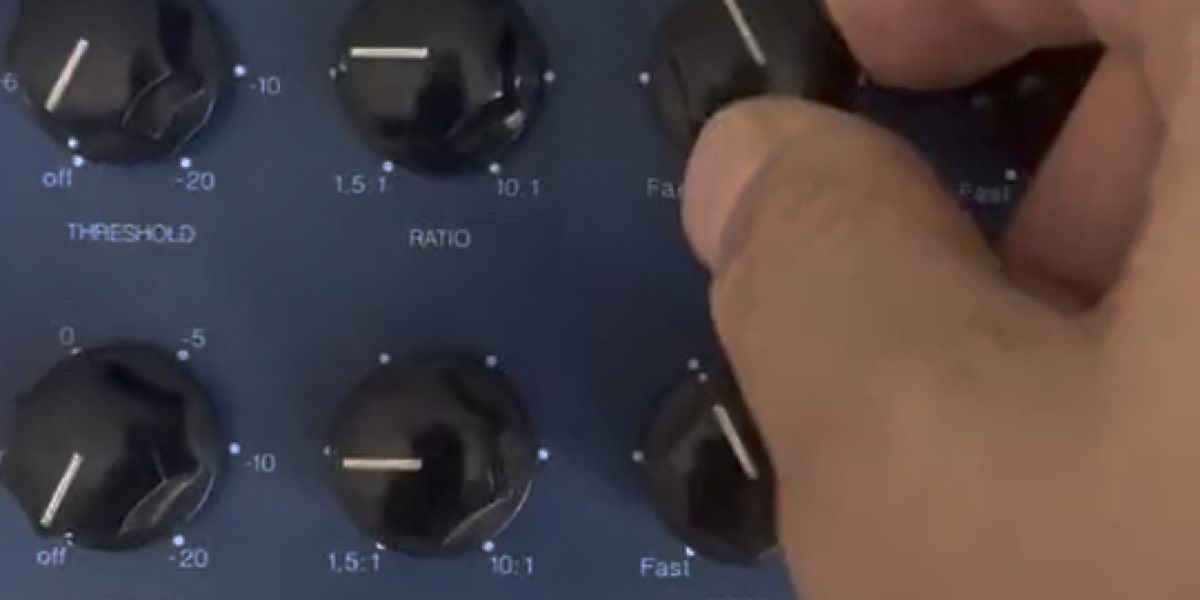
Late in the evening, something clicked. I stopped adjusting everything in front of the limiter and started listening to what my zener limiter was actually doing.
It was undoing my work. Every small correction earlier in the chain, the tone, the balance, the density, went into the limiter and came out flattened. I was working against the very thing I was trying to achieve.
So I dialled it back until those corrections could breathe. That was the first lesson of the day: let the rest of the chain do its job before asking the limiter to do its own.
Less density at all costs, more intention
The second change happened at the very start of the chain. I had been driving the first preamp hard. Today I gave it less gain and more headroom, and the hiss I had been living with went away.
Earlier, I had spent a long time with a tube equaliser, working its low, mid and high bands, trying to get something out of it that it simply wasn't going to give. I kept pushing, tweaking, searching.
Then I went back to the limiter.
Finding the setting
A slower attack. A quicker recovery. Compressor mode rather than limiter mode. Less input than I had tried that morning.
And suddenly, there it was. The density I wanted, with the crest factor still around 9, and no clipper needed in front of the limiter to force the track into shape. The last touch was driving the converter just enough to clip gently on the loudest notes.
No more fighting. No more manufacturing density at every stage. Just the right amount of control, and a little clipping at the conversion.
The master surprised me, in the best possible way.
The ritual
This is what I really want to talk about.
Knowing your tools matters: what each one can do, how far you can push it, how it talks to the next one. We have an extraordinary number of possibilities, and it's tempting to try them all. What if I push the tape? What if I drive the limiter harder? What if I add a little more density?
I go down that rabbit hole about once a week. There's nothing wrong with it. Experimenting is part of the job. It's how ears grow.
But in the middle of all that exploring, it's easy to lose sight of what has always worked: the familiar sequence of decisions that has carried us through difficult material before.
The answer isn't always to do more. Sometimes it's to go back to what you know, trust the process, and let each piece of the chain do its job.
The ritual isn't a fixed set of rules. It's knowing your tools well enough to notice when you're drifting from what matters. When to stop adding pressure. When to stop chasing a sound. When to let the music breathe.
I'm glad I went through it. I'm glad I experimented, and even happier that I found my way back.
Tomorrow, the ritual again.
K.
Journal·8 September 2026·11 min read
Ubiquity
Can an analog mastering engineer exist everywhere?
I had just rebuilt my entire website around a single promise. Two words, at the top of every page, in three languages: analog mastering. Real transformers. Real tubes. Cables and VU meters. A signal path you can point at.
Three days later I landed in Brazil for three weeks, with just a laptop and a pair of headphones, and the requests started arriving. Damn. And did I mention the jetlag?
Continue readingClose
I. When the website started working
There is a particular kind of bad luck that only happens when something finally goes right.
I had spent parts of the summer on that site. Moving it off a platform that was overcharging me and rebuilding it as something I actually liked. Rewriting every single page. Reading it out loud trying not to sound like an idiot or an arrogant nerd: "Send me any mix you have, I'll make it good." Building it in English, French and Brazilian Portuguese, because after my fourth trip there I had convinced myself that it just made sense. Wiring up the booking flow. Browsing through years of past masters, referencing others from famous engineers I respect, publishing five years of notes, edited and rewritten, all in one place where people could actually read it.
Three days after it went live I got on a plane, and while I was in the air the thing started working. Three enquiries in four days, from the United States and from Europe. A fourth soon arrived, someone wanting an old reel digitised, which I mention only because it is the one request a mastering rack in Brussels cannot help with either.
Here is the detail that turned out to matter. They did not mention the analog chain, but it's actually one of my unique selling points. They had listened to the studio playlist and written to me about the sound that they heard and liked. It was nice. They wanted what they had heard in those tracks. Nobody asked what it was made on. I found that interesting, because I am the opposite: a musician by trade who has since discovered a passion for classic analog studio gear, and who cannot hear a record he likes without asking what the sound went through.
I did not notice how important that analog thing was until much later. At the time all I could see was that every piece of equipment I had just spent my summer advertising was sitting in a rack nine thousand kilometres behind me. And my own site promises a first master within three days.
II. The dilemma
The easy read on this is that it was a logistics problem. It was not. Logistics have solutions: you wait, you reschedule, you tell people you are back on the fifteenth.
What made it uncomfortable is that it was a question about honesty.
I could say no. Tell them I am travelling, ask them to wait three weeks, and protect the promise exactly as written. That is the defensible answer, and it is the one most engineers I respect would give. Except that I am new in the business and I would have lost these clients had I told them I was travelling.
Or I could take the work and do it in the box, on a laptop, in a rented flat, on consumer market headphones. Which would mean that the thing I had spent years putting together, and just spent an entire summer promising in three languages was, on this particular record, not strictly true.
I sat with that for longer than I want to admit, and eventually noticed that I had framed it wrong.
I had been treating "analog mastering" as a description of my equipment. But no client has ever asked me for a Neve or a vari-mu compressor. They wanted "that" sound. They ask for warmth, for glue, for the mix to stop sounding like a session and start sounding like a record. The hardware is how I have learned to get there. It is not the thing itself. The people writing to me that week had just demonstrated that, without meaning to.
That distinction sounds like a convenient piece of self-justification, and I was suspicious of it for exactly that reason. So I decided to test it rather than believe it.
III. Rebuilding the studio in a laptop
The first two days went entirely on the laptop itself.
I had assumed this part would be trivial. It was not. My DAW does not behave, out of the box, the way I have made it behave over years of daily use, and I had genuinely forgotten how much of that was mine rather than default. How plugin windows behave. Being able to see just the control I need, one at a time. All the small things you stop seeing because you know your workflows and your hands know them by heart. Two full days disappeared into making a computer feel like my room.
Then I spent two more days actually testing.
For the past year I have kept my mastering method in a repository. Not just session files: a running log of the chain, every stage in order, what each unit is doing and why, what the calibration reference is, what changed and on what date. So many versions, so many tweaks. I started keeping it because I was tired of losing settings, and because my mentor had made it very clear, and I agreed with him, that a decision you cannot reproduce is not really a decision. I thought I was documenting for consistency. But not only.
I was also documenting for portability, and I did not find that out until I actually needed it.
So I rebuilt it stage by stage, and where a hardware stage had no software equivalent I had to be inventive rather than 100% faithful. Some of my hardware simply has no plugin standing in for it. The vari-mu was the easy one, because the software version was chosen years ago precisely for how closely it tracks the unit. Others were approximations I had to arrive at by ear. I printed alternative chains side by side and listened. I went through presets I thought might suit these particular songs, which is not something I ever do at home, because at home I do not need to.
And then I ran the records through it, and here is the honest result.
They came out well. The masters were right for the tracks and the clients were happy. What they were not was "the same". Not the exact same character I would have had in five minutes at home by simply running the track through the rack with my good old default settings. Similar in intent, slightly different in colour, and I am not going to pretend otherwise in an article about honesty. It also did not help that I was working without my usual headphones, without my converters, in a rented flat with no acoustic treatment, jet-lagged, on the wrong side of the Atlantic.
The useful part is what I did once I accepted that. I stopped trying to make the plugins impersonate my hardware, which is a game you cannot win in four days, and went back to asking the only question that actually matters: what does this track need? Then I chose the tools that got it there.
A developer friend once told me that everything starts to look like a nail when the only thing you own is a hammer. My rack is a very good hammer. It is so good that I had stopped noticing how often I was reaching for it before I had finished listening.
So the gear was doing more than I had hoped, and less than I feared. The thing that made those masters good was still the method. The order of operations, the calibration, the decision about where the record needed to end up. The chain executes that beautifully and I would still rather have it. It was not the part generating the decisions.
Years of buying gear, and the most valuable thing I owned turned out to be a text file.
IV. The 60-second sample
That left one honest problem. I thought the laptop version was good. Thinking so is not the same as the client hearing it, and the client had booked a promise I was quietly modifying.
So I did the only thing that seemed fair. Before any money changed hands, I offered to master sixty seconds of the track and sent it over.
No commitment, no invoice, nothing to decline politely. Just: here is what I would do to your record. If this is right, we continue. If it is not, we shake hands and you have lost nothing. Or we talk again when I get home.
It came back positive. On one of them, an EDM track with a great deal of energy in it, it came back with more than I had asked for: a reference track, and a request to remix from stems on top of the mastering I had quoted for. The sample had not just protected the job. It had opened it up.
I expected the whole thing to feel like an apology. It did not. It solved something I had been getting wrong for years.
Mastering is bought almost entirely on trust, trust that you understand the artist's vision and respect it truthfully, and trust is the hardest thing to establish remotely with someone who has never heard your room. Every mechanism the industry uses to bridge that gap is a proxy. Credits are a proxy. A portfolio is a proxy: it proves I made those records sound good, not that I will make yours sound good. Even the analog chain is a proxy, a shorthand for quality the client takes on faith, because not everybody can hear a transformer. They can only hear the result.
Sixty seconds of their own music is not a proxy. It is the actual thing, in miniature. It's a promise. One that has to be respected.
The 60-second test master has since become a permanent part of how I work, and it is on the website now. I did not add it to my services because I was travelling, but because it turned out to be a better way to start any new project, whether I am in Brussels or anywhere else.
V. Ubiquity is not geography
I left thinking the question was whether I could work from anywhere. That is a boring question and the answer is obviously yes, everyone can, that is what laptops are.
The real question was whether I could be the same engineer from anywhere. Not whether I could reproduce the same colour, because in four days on a laptop I could not. Whether the judgment behind the sound travels, or whether it stays in the rack in Brussels with the power off.
The judgment travels. The character is a longer job, and I now think it is a solvable one. Not by finding better impersonations of my hardware, but by learning these tools properly, on their own terms, until I can get where a record needs to go with them as directly as I do with the rack. There are things they will do that my chain cannot. Those are two different claims and only the second one is about equipment.
The signal path is available to anyone with the budget. What is not available is the specific set of decisions I make about where a record needs to end up, and those live in my ears, in a decade of listening, in the incredible training my mentor gave me and, when I am honest about it, in a documented method I can carry in a repository. That is the part clients were writing to me about, even though none of them put it that way.
So this is what ubiquity actually means to me now, in a job I learn a bit more about every day. Not being able to work from anywhere. Being able to deliver the same artistic judgment wherever you are, and being straight with people about what does not come with you.
The analog chain is my signature. My ritual and my ears are my instruments.
And I keep coming back to this, which is the closest thing I have to a working definition of the job:
To me, great mastering isn't just defined by where the signal travels. It's defined by how faithfully the artist's intention survives the journey, regardless of how good your gear or your reputation is.
I found that out because a website started working three days into a three-week trip I had never planned to work through, on the wrong continent. I would not have found it out any other way.
The beginning of a new chapter in my journey as a self-taught mastering engineer.
This past couple of weeks marked the beginning of a new chapter in my journey as a self-taught mastering engineer. I’m calling this series Mastering Evolution because that’s exactly what it is: not just the evolution of my tools and techniques but of my entire mindset. And, like any real growth story, it began with a humbling blow to the ego.
Hi, I’m Kevin, a lifelong musician and an avid vinyl listener. Somewhere between John Coltrane and Kendrick Lamar, Dave Holland and J. Cole, Herbie Hancock and Doechii. That’s where I live. This is me.
Continue readingClose
From Playing to Processing
Over the past few years, I’ve gradually shifted from being a performer to a producer, from mixing to mastering. I had built a workflow. I had a few clients. I had confidence. Then came that Tuesday.
During what I thought would be a casual meeting at the studio where I was collaborating, I was hit with this:
It’s not good enough, bro. We can’t keep marketing your services. Maybe it’s your ears. Or that hybrid setup, there are phase issues. We gotta let you go.
At first, I thought they were joking. They weren’t. And suddenly, I was staring down a quiet but brutal reality: something wasn’t working.
Facing the Music
Instead of spiraling, I chose to reflect. Where were the gaps, in my setup, habits, gear, ears, and process?
First stop: the DAW.
I had been working in Reaper, a flexible but often unstructured environment. Reaper isn’t built for mastering workflows out of the box. Manual phase alignment, inconsistent latency compensation… I had to admit that part of the problem was my system.
I trialed Sequoia (beautiful, but a PC-native headache on a Mac), then finally landed on Steinberg’s WaveLab Pro. It was immediately more intuitive for mastering, rigid where it needed to be, with cleaner plugin chains and AB workflows. Already, things began to shift. WaveLab is a whole new animal compared with any DAW I have used so far, and it is considerably less permissive than Reaper, for the better in my case as its workflow doesn’t allow me to introduce micro errors, likely to ruin a master downstream.
A Listening Chain I Could Trust
My studio space was less than ideal. So, I decided to ditch the room and commit to headphones. At least for now.
I swapped my Shure SRH1440s for the Audeze MM-500, a serious upgrade. I paired them with a Grace Design m900 DAC, following the advice of a seasoned mastering engineer I admire. I now run a clean SPDIF signal straight from my Apollo Twin to the Grace, bypassing any unnecessary conversion stages.
To simulate speaker crossfeed and improve stereo realism, I added Goodhertz CanOpener and began calibrating my headphones with SoundID Reference. My new monitoring setup? Accurate. Repeatable. Honest. And I’m finally confident in what I’m hearing.
Phase: The Silent Killer
One of the main criticisms I received was about phase issues.
We compared your master to another engineer’s version. Yours had the phase inverted.
I was stunned. But it was a wake-up call. I dove into phase correlation, mid/side imaging, and stereo width, things I thought I understood. Turns out I had more to learn.
I started working deeply with tools like HOFA IQ-Analyzer, Ozone Imager, and iZotope Insight. I began hearing and seeing stereo balance in a whole new way. What once felt like technical jargon became an intuitive part of my QA process.
QA, Referencing… and ChatGPT?
I now structure every mastering session with a QA checklist. LUFS, RMS, crest factor, LRA, spectral tilt, THD, stereo spread, mono compatibility. I want the numbers to support the vibe.
Surprisingly, I’ve been using ChatGPT to assist in that process. I upload metrics, compare my outputs, and use it to sanity-check my thinking. It’s no substitute for human coaching or decades of golden-eared experience, but it’s a great mirror, especially when I’m deep in the weeds.
What’s Next?
I cleaned the house. Literally.
I removed the unnecessary clutter: unused gear, excess screens, and tangled cables. I downsized my desk. I gave myself breathing room. I began trusting my chain, trusting my ears (while testing them), and most importantly, trusting my willingness to evolve.
This series isn’t about pretending I’ve figured it all out. It’s about honesty. Growth. And building something sustainable.
So here we are: Episode 1, The Reset. Let’s see where this road leads.
Two weeks ago, I sat in a room I once considered a second home, the studio I had contributed to, learned in, and believed in for a year and a half. A place I was invited into by musician and sound engineer friends who saw potential in the mastering service I was building.
Then came the sentence that cut deeper than expected:
Continue readingClose
“It’s not good enough, man. We can’t keep marketing your services.”
At first, I smiled. A misunderstanding, surely. But the silence that followed made it real. I was kindly encouraged to seek feedback from other engineers, but the collaboration was over. No roadmap. No post-mortem. Just a gut punch and an open door behind me.
So here I am. Writing. Not to sulk, but to reset. That uncomfortable moment forced me to zoom out and ask the hard questions. About my craft. My process. My mindset. My ear. And the reality of walking the self-taught path.
From Friendship to Business: Reframing Collaboration
In hindsight, my biggest mistake wasn’t technical. It was interpersonal.
I approached the studio partnership like a friendship, grounded in trust and shared creative energy. But what it needed was structure, clarity, and mutual accountability.
Lesson learned: Even in music, collaboration is a contract. Define roles. Clarify expectations. Build a shared language for feedback. Never assume that “no news” means “all good.” My previous masters had been approved and released on Apple Music and Spotify, but mastering isn’t a one-time victory. It’s a continuous refinement loop.
As projects scale, so do expectations. And the margin for error shrinks. Looking back, I simply wasn’t ready. But this is where humility kicks in.
The takeaway? Stay humble. Listen harder. And remember: every tough piece of feedback is a doorway to improvement. Take the pill. Do the work.
Rewiring My System: The Technical Reset
If Episode 1 was the emotional shakeup, Episode 2 is about recalibration, technical and mental.
My signal chain had become a spaghetti mess. Multiple analog ins and outs. Latency and phase shifts were introduced at every step and built up. Reaper, while endlessly flexible, doesn’t handle phase alignment automatically, and I had neglected to manage it manually. My monitoring setup? SHURE SRH1440 headphones running directly from the UAD Apollo Twin’s DAC. Good gear, but not enough to catch subtle phase cancellations or imaging imbalances.
Hardware Upgrades
Headphones: I upgraded to the Audeze MM-500, inspired by Schwabe Digital and recommended by mastering legend Alan Douches. Depth, neutrality, and zero fatigue. It changed the game. I decided not to upgrade to the Audeze LCD-5; the MM-500 is more than capable. Babysteps.
DAC: I switched to the Grace Design m900, fed via SPDIF from my Apollo. It has a cleaner signal, native crossfeed, and better imaging.
Power: I removed 10+ power strips. Simplified cabling. Reduced noise floor. Four switches. One clean path. No more chaos.
Software + DAW
DAW: I left Reaper behind for WaveLab Pro 12.
It gave me structure. Stability. Visual clarity.
AB testing and signal block muting are a breeze.
Its project architecture is brilliant, managing multiple albums and sessions under one umbrella while recalling plugin chains and comparisons from previous albums instantly.
Playback Monitoring:
I use CanOpener, SoundID Reference, and selective corrective EQ plugins in the master playback section to fine-tune what I hear.
Sequoia was a contender, but its cost, Windows-only environment (and Parallels latency) didn’t justify the switch. Not yet.
Phase Paranoia: From Blind Spot to Guiding Light
What feedback hurt most?
“Your master had phase inverted.”
I hadn’t noticed. I should have. It haunted me. It still does.
So I got to work:
HOFA IQ Analyzer: For M/S balance, mono compatibility, and precise frequency spectrum insights.
Ozone Imager & iZotope Insight: For band-specific stereo analysis and widening control.
Correlation Meter: Non-negotiable now. If it dips below 0.9, I stop everything and assess.
I also started monitoring in left-minus-right mode to isolate side content, a trick made easy with the m900 DAC and CanOpener crossfeed emulation.
Beyond the Gear: Personal Impact & Systemic Growth
This journey didn’t just rewire my setup. It rewired my brain.
I’m no longer chasing other engineers. I’m building my system with standards grounded in care, process, and repeatability.
Here’s what’s changed:
I now run a structured QA checklist for every master (LUFS, RMS, DR, PLR, THD, stereo width, etc).
I occasionally use AI-based tools as a sanity check (not gospel, but helpful for spotting trends or overlooked areas).
I’m religiously reading Bob Katz’s Mastering Audio: The Art and the Science.
I’m joining mastering critique circles to normalize feedback, sharpen my ears, slowly build my self-confidence, and share my evolution.
What’s next?
I haven’t mastered mastering. But I’m on my way.
This series isn’t about plug-ins. It’s about perspective. It’s about becoming a mastering engineer, one frequency band, one painful truth, one moment of clarity at a time.
Turning a pile of gear into a signal chain I trust.
In Episode 1, I shared how a sudden loss of studio collaboration forced me into a reset. Episode 2 was about rebuilding, rethinking my setup, tools, and approach. This third chapter focuses on refinement: consolidating what’s working, deepening my understanding, and dialing in the technical chain for greater clarity and control.
Let’s call it what it is: a mastering renaissance.
Continue readingClose
Headphones & Listening Environment: Dialed In
The long-awaited Audeze MM-500 headphones have arrived, and they’ve already transformed the way I hear, especially in terms of side clarity and stereo definition. Paired with the Grace Design m900 DAC, SoundID Reference, and Goodhertz CanOpener, I’m now working with a far more honest and spacious soundstage.
CanOpener presets are still a work in progress. I’m experimenting with both built-in options and custom ones suggested by ChatGPT (yes, again). But so far, the combo is working well. My stereo perception is sharper than ever.
Workflow Structure: Three Levels of Processing
One of the major improvements is how I’ve structured my plugin chain and workflow inside WaveLab Pro 12. I now work in three logical stages:
Clip Level (Micro Adjustments)
Corrective EQ
Corrective compression
Stereo image adjustments
This is where the surgical work happens. I address phase, harshness, and tonal balance before things even hit the analog chain.
Track Level (Tone & Texture)
UAD Ampex Studer A800 Tape Recorder
De-essing
Analog gear chain (via hardware inserts)
This is where I add tone, glue, and saturation. Once printed, these analog-processed files are rendered out.
Master Track (Final Polish & Limiting)
Clipper
Inflator
Maximizer
Several dynamics and stereo analysis tools (for final stereo imaging QC)
Once the rendered files are brought back in (at 96kHz, 48kHz, or 44.1kHz depending on the format), I run the final QC and loudness optimization on the Master track.
I’m also starting to set up presets for formats like vinyl and streaming so that I can efficiently switch workflows without reinventing the wheel each time.
Phase, Imaging & Quality Control
I now emphasize clip-level stereo processing, not at track level. It keeps the phase integrity intact and avoids smearing the stereo field. The stereo image tools have become essential here, helping me double-check spatial coherence before the limiter stage.
For QA, I’ll soon dive deeper into:
HOFA IQ Analyzer for M/S balance and mono compatibility
WaveLab’s Album Wizard to manage track spacing, metadata, and rendering consistency
Left-minus-right monitoring for isolating side channel content
This is where WaveLab’s audio montage workflow really shines. It allows for non-destructive editing across multiple clips, with the same tonal texture applied at the track level, ideal for EPs, albums, and grouped singles.
What’s Coming Next
Maag EQ Hardware: My technician friend is finalizing a DIY unit I invested in. Once integrated, it will be placed after my HCL Varis Vari-Mu as the last analog processor before conversion. I expect it to bring a silky top-end sheen and low-mid clarity.
Cable Upgrades: After researching options, I plan to upgrade key connections in March or April. It has a cleaner signal flow, less resistance, better sound, and only balanced cables as opposed to the day’s mix of balanced and unbalanced connections.
Further WaveLab Training: I subscribed to a specialized WaveLab learning platform. The documentation is granular and actionable. It will support my upcoming deep dive into analysis, format-specific workflows, and metadata prep.
Final Thoughts
The clarity I’m getting now, both sonically and mentally, didn’t come easy. But every day with this new setup, I’m getting closer to a system I trust. A system I can replicate. And most importantly, a system that reflects the sound I want to offer.
The shift from frustration to refinement is ongoing. I’m still learning WaveLab, still shaping my reference curve with these new headphones, and still pushing to deliver a professional sound using a hybrid setup optimized for headphones.
Getting the workflow to hold under real deadlines.
The past few weeks have marked the start of a new chapter in my journey as a self-taught mastering engineer.
In the last episode, I shared how I went from collapse to calibration, refining my technical setup, listening chain, and workflow after an unexpected breakup with the studio I’d partnered with for over a year and a half. A few weeks later, it’s clear: that moment wasn’t a detour. It was a pivot.
Continue readingClose
This chapter is about integration, bringing together hardware, software, and mindset, and testing whether the system I’ve rebuilt can perform under pressure.
Spoiler: It can.
From Scratch to Delivery: A Workflow That Works
I’ve fully settled into WaveLab Pro 12, and it’s been a game-changer. I’m finally at the point where I can load a project from scratch in the morning and deliver masters by the afternoon: clean, tight, and built to spec.
Each project is structured with Audio Montages, which give me clip-level processing, track-level coloration, and master bus limiting, all with surgical precision. I’ve also started using lane-based organization for smoother blends and crossfades, especially helpful when rendering multiple formats (96kHz, 48kHz, 44.1kHz) or prepping for vinyl.
Software, AI & Phase Sensitivity
The toolset is now dialed in, and I’ve made peace with AI. A cautious peace.
For stereo imaging and phase alignment, I now use iZotope Insight and Ozone in two key areas:
At the clip level, to tame problematic stereo spread or subtle misalignments.
At the master track, post-analog summing for final cohesion and polish.
Letting Ozone do a quick first pass helps me catch phase issues I might’ve missed. I strip away most modules and sometimes keep only the EQ or Imager. This isn’t laziness. It’s quality control. Let the machine flag issues. I’ll decide what matters.
Pre-render, my mastering chain includes:
HOFA IQ Analyzer: M/S balance and mono compatibility
Flux Stereo Tool: stereo imaging monitoring
WaveLab MasterRig: dynamic shaping
Schwabe Gold Clip: analog-style clipping
Oxford Inflator: harmonic richness
Ozone Maximizer: peak limiting
The goal is always the same: transparency meets energy.
Hardware Refinements: Now We’re Talking
After weeks of testing, I’m nearly there with my new analog chain.
Audeze MM-500 headphones. Worth every cent: neutral, deep, non-fatiguing.
Grace Design m900 DAC, paired with SPDIF out from the Apollo Twin. My monitoring chain is now rock solid.
Mäag EQ4 (DIY clone): a 6-band analog EQ placed after the HCL Varis Vari-Mu compressor; adds air and definition at the final analog stage.
Note: I initially had signal issues. It turns out the Mäag only works with balanced cables. Lesson learned.
Update 1: I found a Warm Audio Bus Comp (SSL-style) locally via a friendly Ukrainian engineer. It packs a serious punch, perfect for hip-hop, rock, and high-energy genres.
Update 2: I reorganized the chain for more versatility:
Warm Audio Bus Comp
Mäag EQ4
Drawmer DL 251 (spectral compression)
Vari-Mu (final polish)
This isn’t the full chain, but it shows how I’m tuning my hardware for genre flexibility and smoother delivery.
Cables Matter (More Than I Thought)
Yes, I went there.
I replaced my mismatched patchwork of cables with Belden and Mogami balanced connectors. Pro-grade wiring from DAC to interface to compressor. The result?
Lower noise floor
Tighter signal
A sense of “focus” in the final sound
When mastering, not adding anything unwanted is everything.
If you’re considering a cabling upgrade, do it. I highly recommend this vendor. The service and quality were top-notch.
2. Post-render: After analog processing, I bring the file back into WaveLab for:
Final clipping and limiting
Master EQ sweetening
Output in all necessary formats
By treating analog output as a milestone, I reduce the need to reprint hardware stages, and focus future tweaks on digital finesse.
What’s Next: Business Mode Activated
With a refined system, clean cables, clear monitoring, confident workflow, I’m preparing to relaunch my mastering services on freelance platforms this March.
I’m no longer trying to “fit in” with other engineers. I’ve built my own process, my own reference points, and my own trust in my ears.
I still dive into tutorials, WaveLab manuals, and mentorship conversations. This isn’t a solo climb. But I’m no longer climbing blind.
Final Notes
This isn’t a fairy tale.
It’s a bounce back, from “you’re not good enough” to “this is better than before.” Not because I’m perfect. But because I stayed in the game.
In the next episode, I’ll dive into my QA checklists: how I track spectral tilt, loudness, THD, and stereo correlation, and how AI, surprisingly, has become an ally in the feedback loop.
If you’re building something, anything, keep going. If you’ve been knocked down, recalibrate. Don’t let someone else’s panic define your pace.
The checks that stop a bad master leaving the building.
The Final Piece of the Setup
Recently, I wrapped up some critical upgrades to my audio setup. I received a batch of balanced cables from a company I’ll gladly recommend, long overdue after a year and a half of working with unbalanced connections.
Continue readingClose
The difference was immediate and undeniable: cleaner transients, tighter low end, and a dimensional clarity I hadn’t even realized I was missing. With the new cabling in place, the DAW, my workflow, and even my daily habits began to evolve.
This opened the door to a deeper focus on quality control.
I began using AI to help define and track around 20 micro-metrics, everything from integrated LUFS, peak levels, crest factor, stereo image, and harmonic distortion to spectral tilt. Some of these I was already familiar with. Others, like THD thresholds (keeping saturation under 1%) or realizing that my spectral balance leaned too heavily into the highs or lows, were powerful insights.
I also restructured my mastering workflow in WaveLab. Key processes like tape saturation and de-essing were moved from track-level to clip-level for greater precision. Stereo imaging tools followed. These refinements brought me closer to a mastering approach that feels both flexible and intentional.
But there was one QA element I still hadn’t addressed.
The Human Element: Hearing
It was time to face the most critical piece of gear in the room: my own ears.
I booked a hearing test with a specialist. A few days later, I found myself in a soundproof booth, wearing a headset that looked like it had survived the ’90s. The equipment was visibly aged, and I found myself skeptical. The results were still sobering.
I hadn’t had a hearing test in decades. Turns out I have significant dips: around -50 dB at 2 kHz and -60 dB at 4 kHz. My low mids (125 Hz to 1 kHz) were mostly intact, but those upper-mid frequencies? Crucial. That’s where the vocals live. The snare. Guitar articulation. Presence. Clarity.
The specialist recommended hearing aids.
I was stunned.
Is this why some of my recent masters felt a bit off? Have I been compensating for hearing loss without realizing it? Would this affect only my work, or my life?
That night, I spiraled. I researched hearing aids, read testimonials, and weighed the emotional and technical impact. I wasn’t ready to become “someone who needs help hearing.” I didn’t want it to be visible. I didn’t want it to feel like defeat.
Taking Control: DIY Hearing Analysis
I wasn’t fully convinced by the test. The equipment was outdated, and the process felt rushed. So I turned to the tools I do trust: my DAW, my plugins, my ears, and a few hearing test apps.
Using well-reviewed (and often free) hearing test apps, I ran a series of checks at home. The same frequency dips showed up at 2 kHz and 4 kHz, and a milder one at 500 Hz. This time, though, the dips were more moderate: -40 dB at 2 kHz and -45 dB at 4 kHz, symmetrical in both ears.
Unscientific? Yes. But still incredibly useful. These tests confirmed three key things:
1. Yes, I have real hearing loss at key mastering frequencies.
2. No, it’s not as catastrophic as I feared.
3. Yes, I needed to address it to continue delivering high-quality work.
Testing EQ Corrections
I wanted to know what would happen if I corrected those dips, not with hearing aids, but with EQ.
I opened WaveLab and inserted a FabFilter Pro-Q3 on the playback section. I started with a full compensation: +40 dB at 2 kHz and +45 dB at 4 kHz.
It was awful.
It felt like bees were trapped in my headphones: harsh, overwhelming, and unlistenable.
So I dialed it back. After some experimentation, I landed on a gentler curve: +6 dB at 2 kHz, +8 dB at 4 kHz, and subtle adjustments at 500 Hz. FabFilter’s ability to EQ left and right ears independently made all the difference.
Suddenly, brightness and compression started making sense again. I was hearing more accurately, more confidently. It felt like recovering a lost part of my reference.
What’s Next
I’m not rushing into hearing aids. But I am going to keep monitoring the situation, and adapting.
For now, I’ll apply subtle EQ correction in my monitoring chain, post-SoundID Reference and CanOpener, to align what I hear with reality. Think of it as room correction, but for your ears.
I’ve also prepared a mastering portfolio using Samply.app, a clean way to share work without endless file transfers. Feel free to check it out and share feedback.
Final Thoughts
This episode marks a milestone.
The gear is optimized.
The workflow is structured.
The ears are calibrated.
There’s still more to learn and more to refine. But I now have a stronger foundation than ever before. My focus going forward is to keep practicing the craft, track the metrics, monitor my hearing, and refine my instincts.
The QA layer isn’t just about LUFS, stereo width, or harmonic distortion. It’s about honesty: with your tools, with your process, and with yourself.